
One parent. Several journeys.
MiniSport’s customers are families. Parents enquire, children attend, and enrolments repeat across school terms. A single status against the parent could not tell the whole story.
I led discovery and CRM architecture around those relationships. The key decision was simple: keep the parent as the contact, and give each child’s enrolment its own opportunity.
Child 1
This term
EnrolledChild 2
This term
Considering a trialChild 1
Next term
New enrolment recordA sibling can be considering a trial while the other child is already enrolled. A returning term creates a new opportunity, preserving the previous term’s history.
These fields make each enrolment understandable and filterable. The ownership design also keeps siblings with the existing family owner.
Start with the real process.
The context lived in conversations.
- Family and enrolment information mixed together.
- Direct enquiries could lack an opportunity.
- Tags and manual updates carried the context.
- Staff had to remember the next follow-up.
Give every journey a place.
- Separate opportunities for children and terms.
- Source capture and a New Lead record.
- Named fields and clear ownership.
- A follow-up sequence with a defined end.
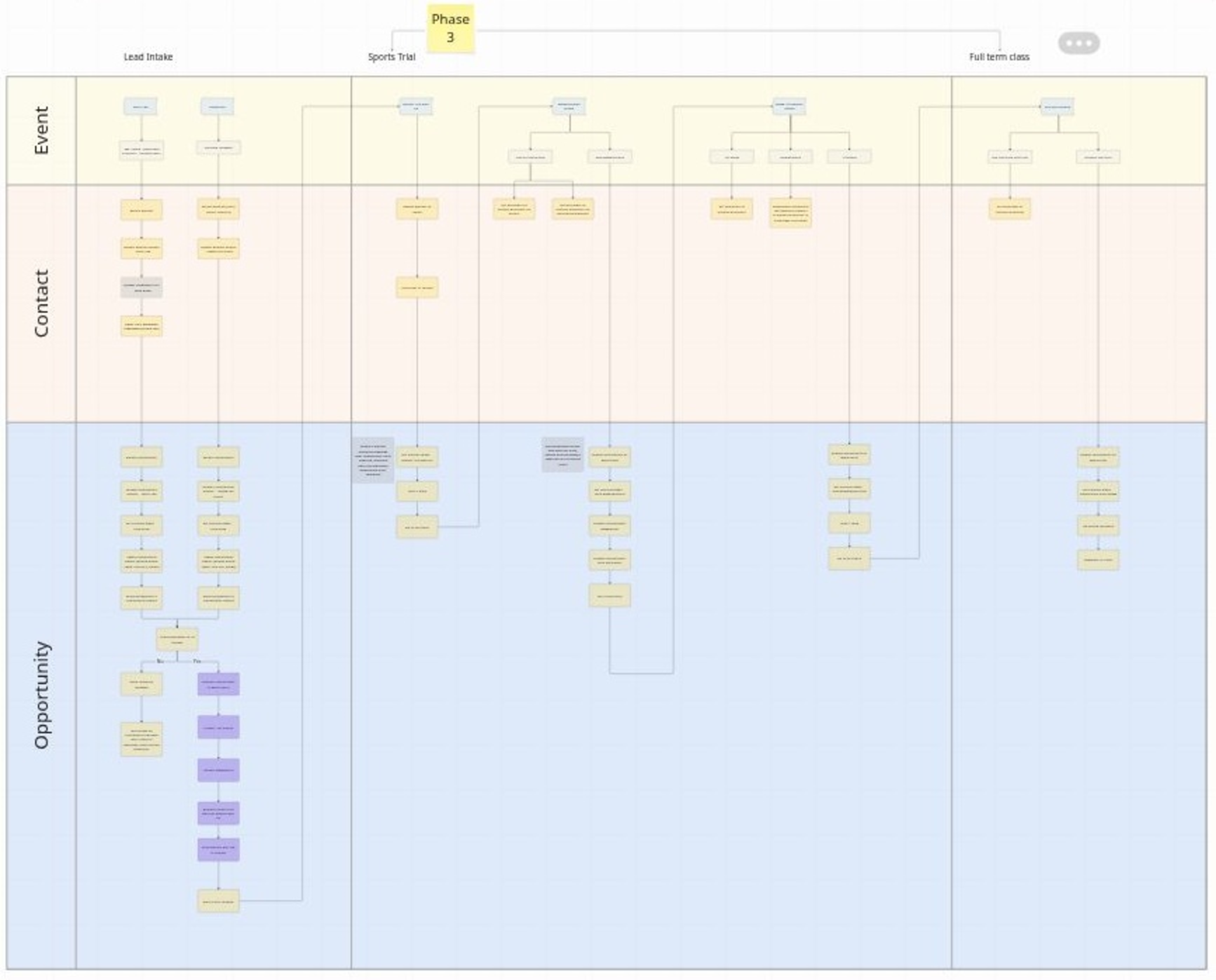
The workshop footage at the top of this page is from the actual MiniSport scope and process walkthrough. These are the maps behind the design, with identifying details redacted.

Three routes. One sales pipeline.
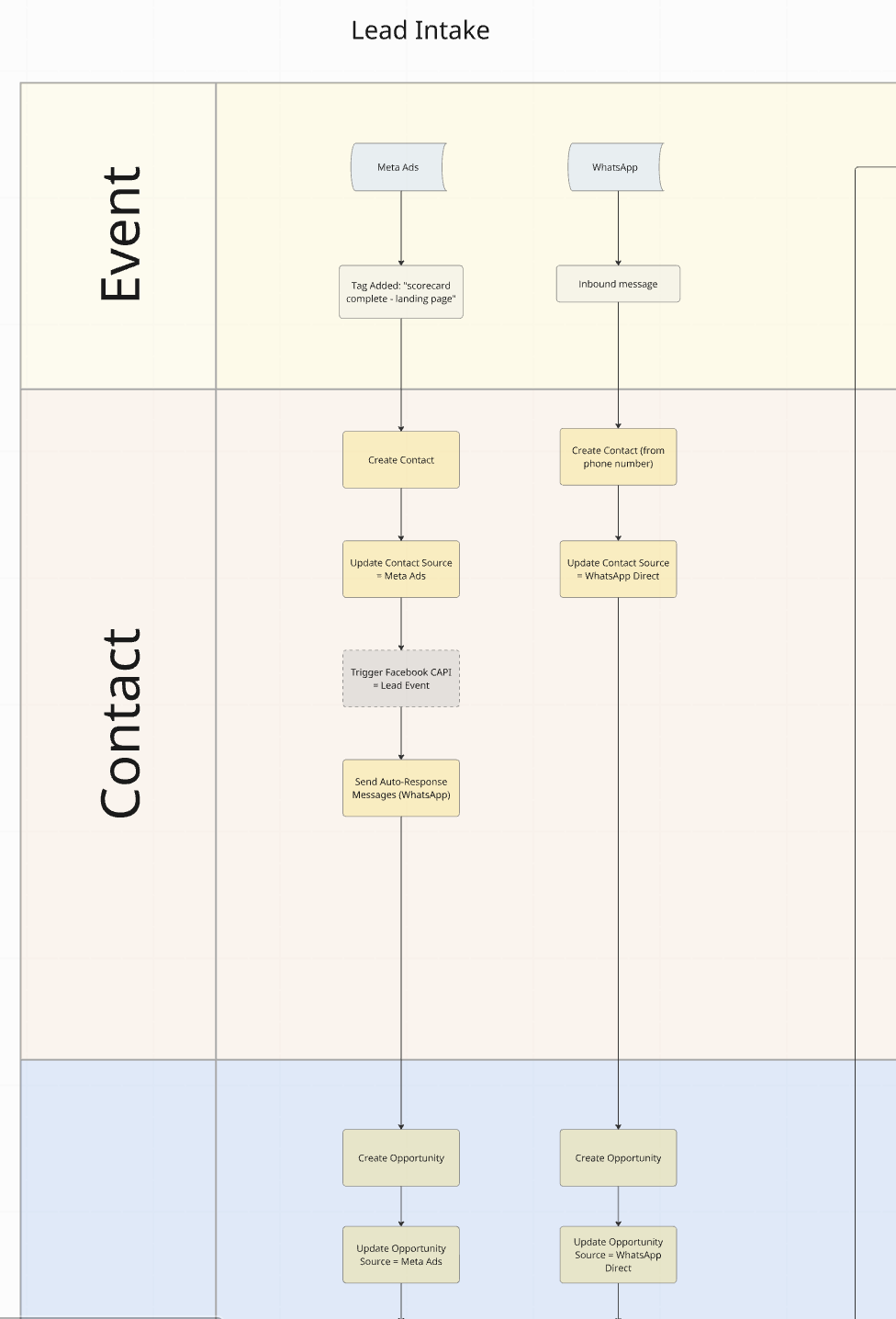
The Phase 1 handover describes three intake routes. Each gives the team a sourced opportunity and an owner, with messaging suited to how the enquiry arrived.
WhatsApp direct
- Check for an overlapping workflow.
- Set the source and create a New Lead opportunity.
- Assign an owner and notify the representative.
The team starts the conversation personally.
Scorecard started
- Wait six minutes for completion.
- If incomplete, record the source and create an opportunity.
- Assign an owner and send a general check-in.
A failed message still leaves an opportunity to follow up.
Scorecard completed
- Proceed immediately.
- Capture attribution and create a New Lead opportunity.
- Assign an owner and send a personalised message.
Use the child’s name and preferred district from the scorecard.
See the original intake design
Follow-up that knows when to stop.
For completed scorecards, the handover sets out a bounded sequence. A reply stops automation so the team can take over the conversation.
- Start
Personalised message
First WhatsApp message after the completed scorecard.
- +2 days
First follow-up
Only if the parent has not replied.
- +2 more days
Final follow-up
One last reminder if there is still no reply.
- End
Sequence stops
The next action is back with the team.
A reply at any point ends automation.The team continues the human conversation.
This is the completed-scorecard sequence described in the Phase 1 handover. Direct WhatsApp enquiries follow their own intake route.
A foundation for the next term.
Know the parent.
Track the enrolment.
Parent contacts, child identifiers, age group, sport and term give the system a consistent structure.
Connect the right event
to the right record.
The blueprint also maps app sign-up, membership, trial booking, attendance and repeat-term journeys.
The agreed sequencing focused on the foundations and initial workflows while MiniSport’s app plans developed. Full booking and attendance sync, and advanced retention, belonged to later phases.
What this phase covered
The initial phase covered CRM foundations, lead intake, attribution, ownership and follow-up, alongside integration design, data mapping, initial training and documentation.
The handover preserved existing records, fields and tags. Structured enrolment fields provide the core model, with occasional tags supporting ad hoc communication. The wider blueprint maps later app, booking, attendance and retention connections.
When one buyer represents several participants or repeat bookings, build the CRM around those separate journeys.